Rwanda: Beyond genocide
Text and photographs by Evan Frilingos
The 1994 genocide against the Tutsi left up to over a million people dead, millions displaced and a country decimated. Neighbors turned on each other and families fractured under an ideology of hate and violence against anyone not aligned with the extremist Hutus in power.
Before traveling to Rwanda in May, I would have incorrectly deemed the genocide a war between tribes. I wouldn’t have correctly blamed Belgium for creating the division between Hutu and Tutsi, nor would I have detailed the critical failures of the United States and the United Nations Security Council to intervene.
I wouldn’t have mentioned that Hutu and Tutsi lived peacefully and mixed together before colonization. And I wouldn’t explain the reconciliation and reconstruction that began after the genocide and continues today.
I couldn’t have told Rwanda’s larger story because I only knew the single story Chimamanda Ngozi Adichie warns of in her TedTalk, “The Danger of a Single Story.” The one-dimensional narrative of violence in Rwanda that I was taught in school prohibited me from imagining the Rwanda I witnessed in May: A nation building a shared national pride, a system for reconciliation, an Afrofuturist capital, a climate-neutral economy and more.
But Rwandans have not “forgiven and forgotten” their way forward. Acknowledgement of the genocide is a primary function of progress.
I created “Rwanda: Beyond Genocide” to dissuade myself and the audience from defining Rwanda by the single story of violence I would have clumsily retold before visiting. This story is a glimpse I got at evidence of the hope that exists in the human capacity to love, to reconcile and to progress when we acknowledge our opposite capacity for evil.
Click on each photo to read the captions and get the full story.
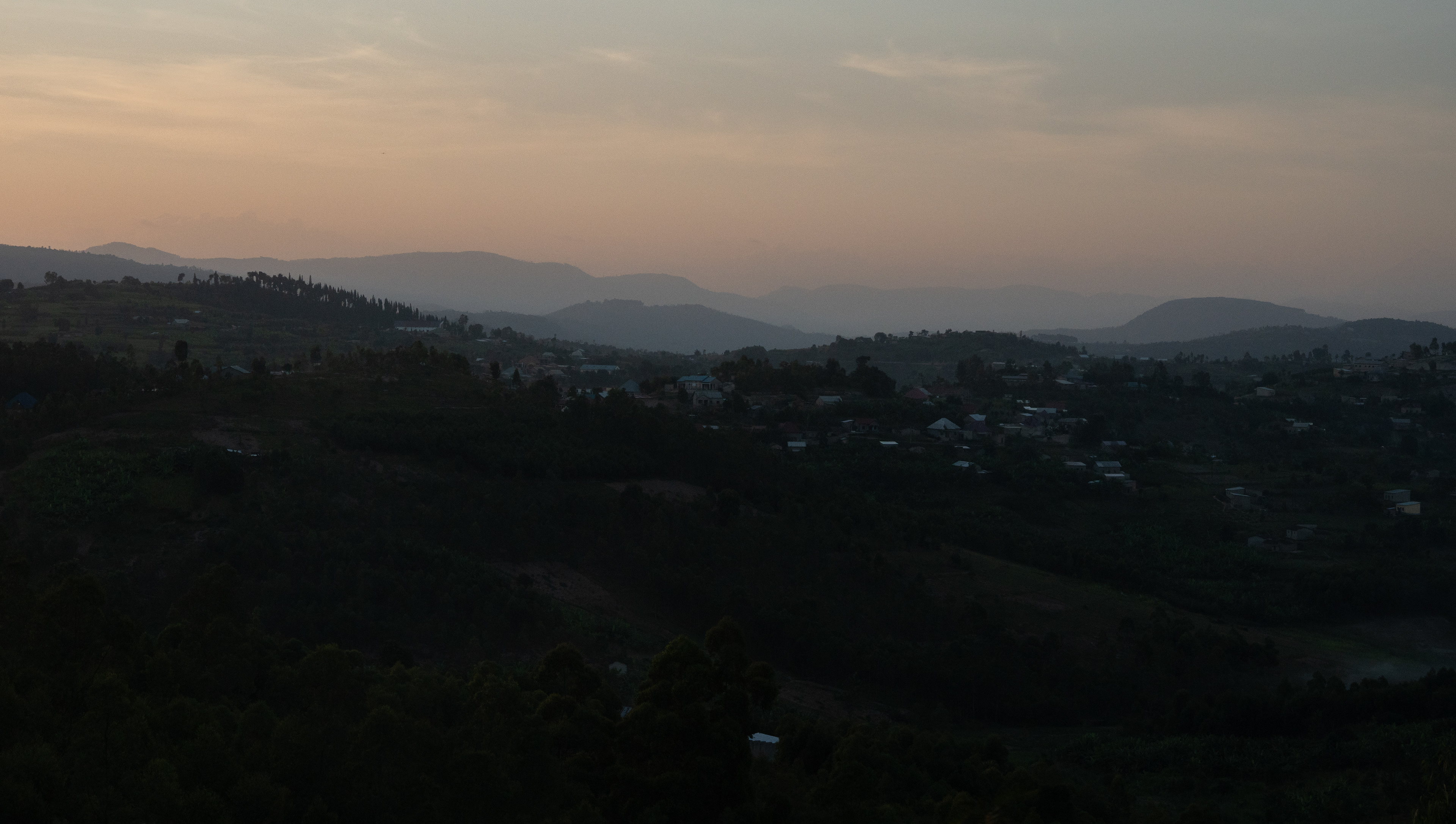
The hilly countryside at sunset on Sunday, May 24, 2026 in Rwanda. Rwanda is known as the land of a thousand hills for its mountainous, hilly topography. Kigali’s average altitude is over 5,000 feet above sea level, and the nation’s highest point is atop Mount Karisimbi at 14,787 feet. Rwanda is just below the equator, but the altitude keeps temperatures between around 60-80 degrees Fahrenheit. The landscape is often tropical. (Photo/Evan Frilingos 2026)
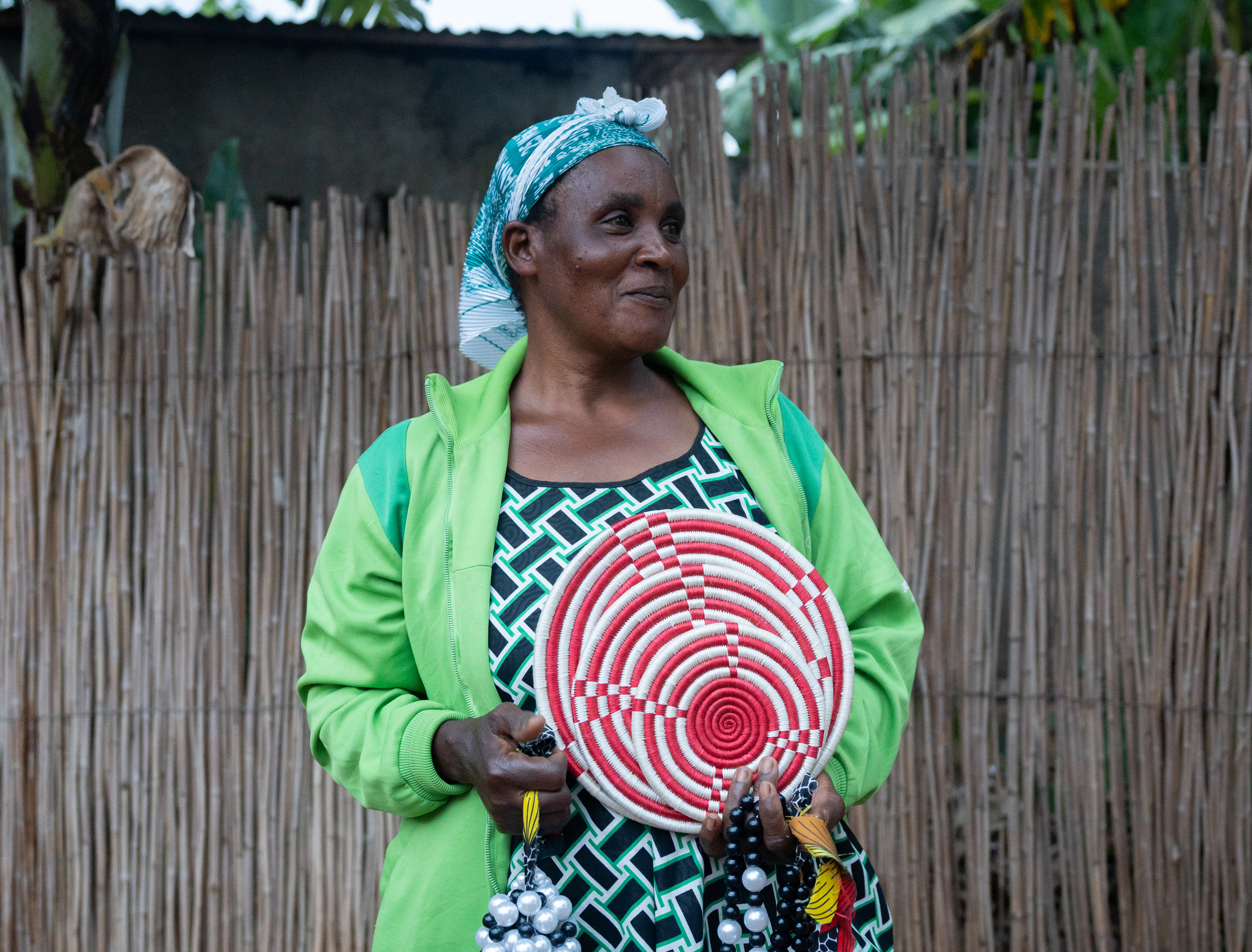
Anna Maria poses with woven pieces she made on Wednesday, May 20, 2026 in Unity Mountain, Rwanda. Anna Maria is part of a cooperative formed by women who are survivors and wives of perpetrators of the genocide. Their larger community is Umusozi w'Ubumwe, Unity Mountain, a reconciliation community led by Rabagirana Reconciliation Hub. Rabagirana is a Rwandan, Christian organization that focuses on reconciliation and peace-building after the genocide. It involves faith as a piece of common ground for community members to come together through. Among the items made by the women are peace baskets, which have become the national symbol of Rwanda as markers of the progress in unity, hope, and reconciliation the country has made over the past three decades. (Evan Frilingos/ Evan Frilingos 2026)
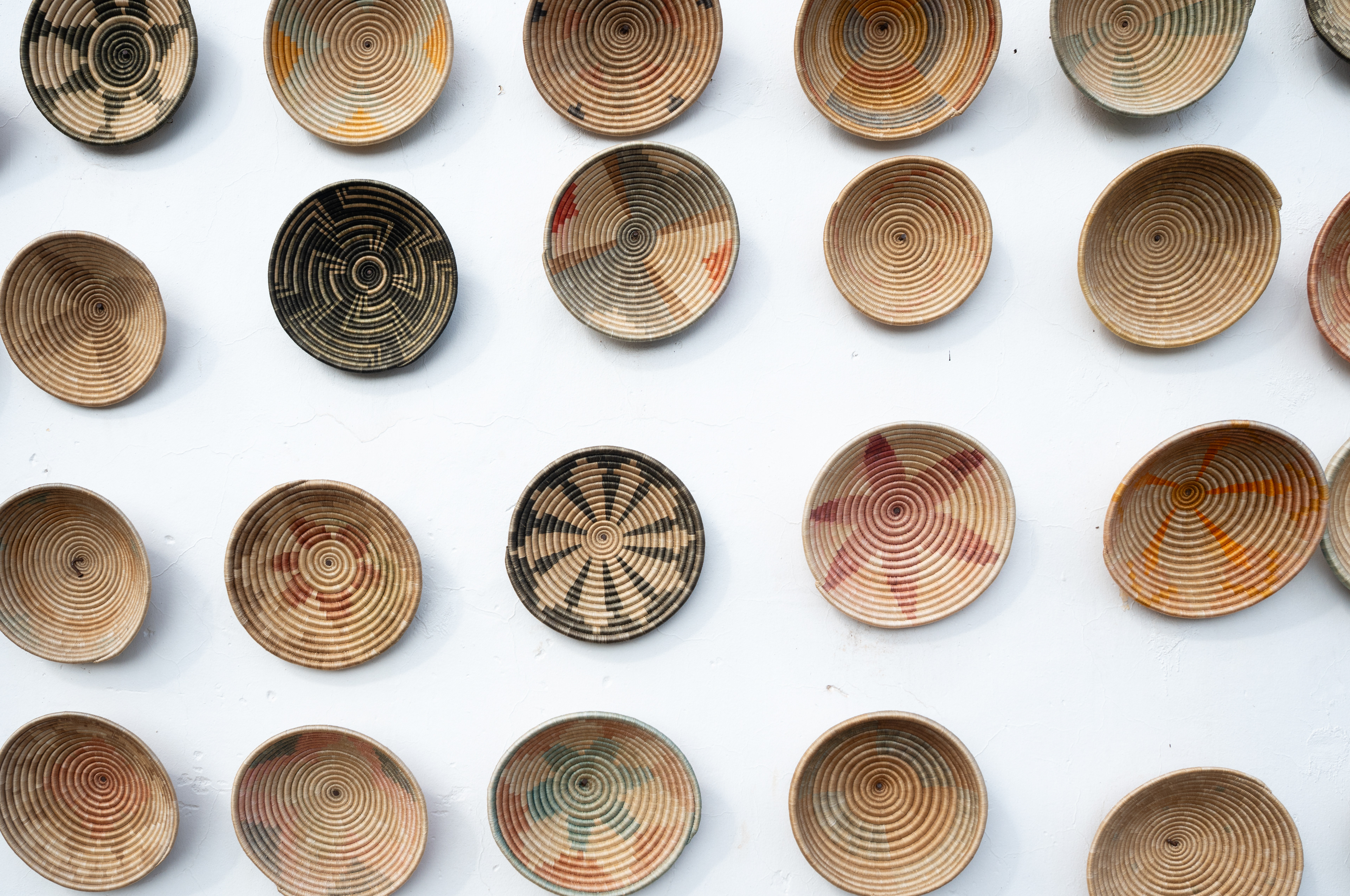
Woven baskets made by women’s cooperatives hang for sale outside Abraham Konga Collections on Friday, May 22, 2026 in Kigali, Rwanda. A 2025 case study by the International Institute for Sustainable Development highlighting the women’s cooperatives and associations notes that Rwanda has made significant progress towards women’s empowerment. 61.3% of Rwanda’s parliament are women, the highest proportion in the world, alongside nearly half of all cabinet members and judges being women. The nation’s 2023 constitution enforces a minimum 30% quota for women across all decision-making bodies. Large average pay gaps and inequalities still exist, the study said, and women’s cooperatives are key to increasing economic opportunities for Rwandan women. (Photo/Evan Frilingos 2026)
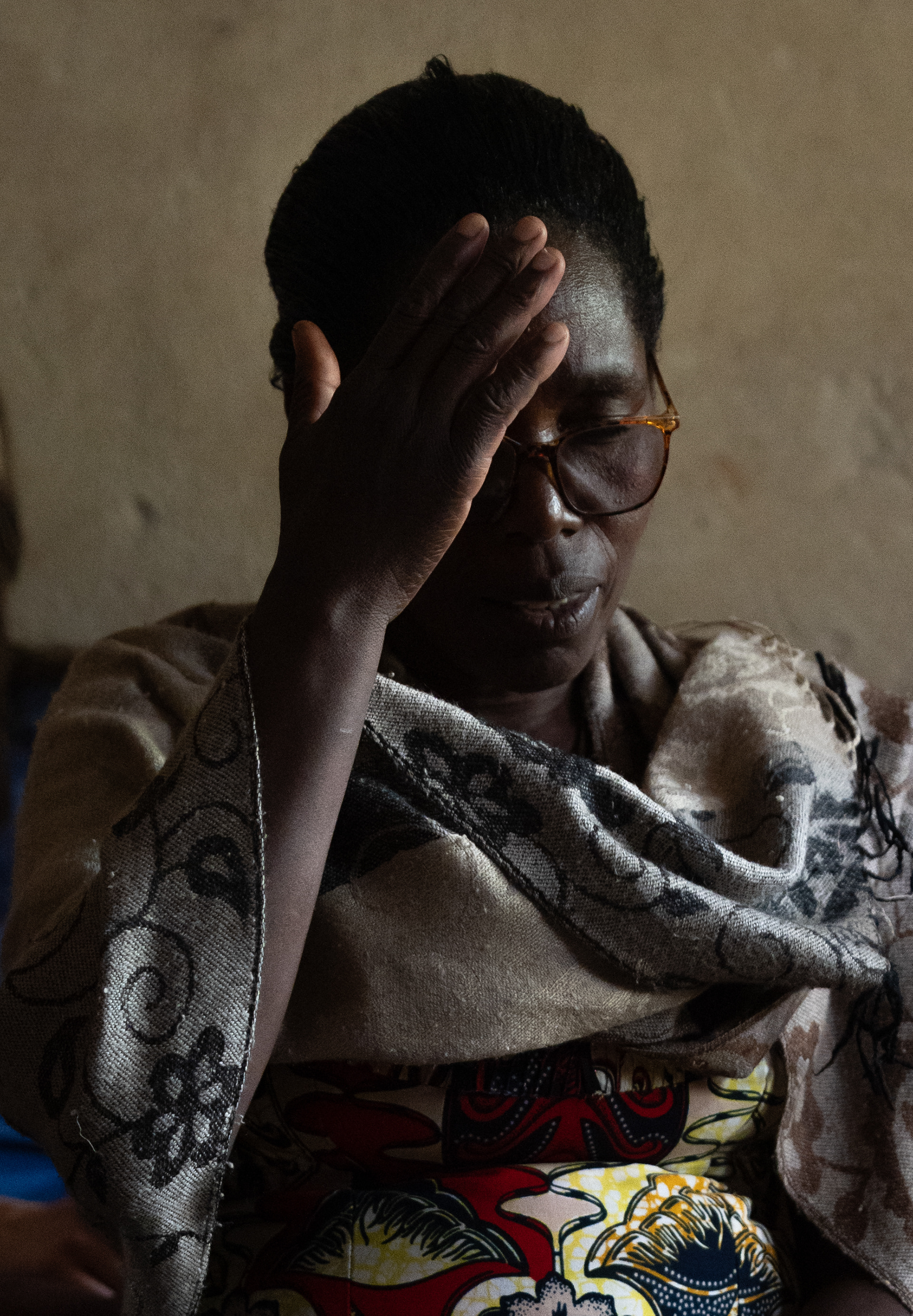
Flortine prays in a rural home on Sunday, May 24, 2026 in Karama, Rwanda. Over 90% of Rwandans are Christian, according to the Association of Religion Data Archives. (Photo/Evan Frilingos 2026)
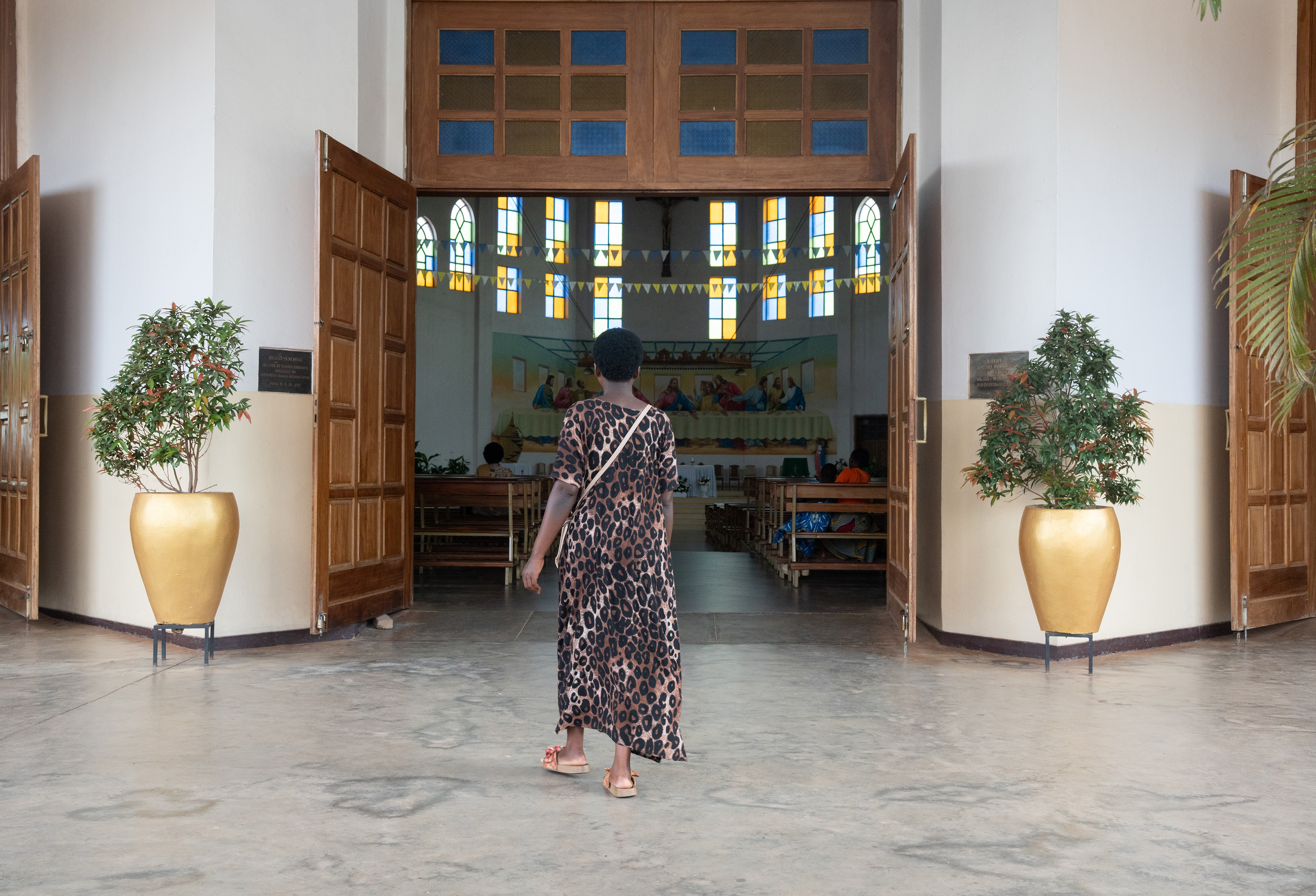
A woman enters the Catholic Paroisse Regina Pacis Remera church on Friday, May 29, 2026 in Kigali, Rwanda. Catholicism maintains the highest proportion of Christian Rwandans, but Protestant numbers have been increasing and are projected to surpass the declining Catholic numbers. The Protestant increase mirrors a broader one occurring across the Global South, but some Rwandans said the decreasing Catholic numbers could be a result of the role some Catholic Churches played in collaborating with perpetrators during the genocide. (Photo/Evan Frilingos 2026)
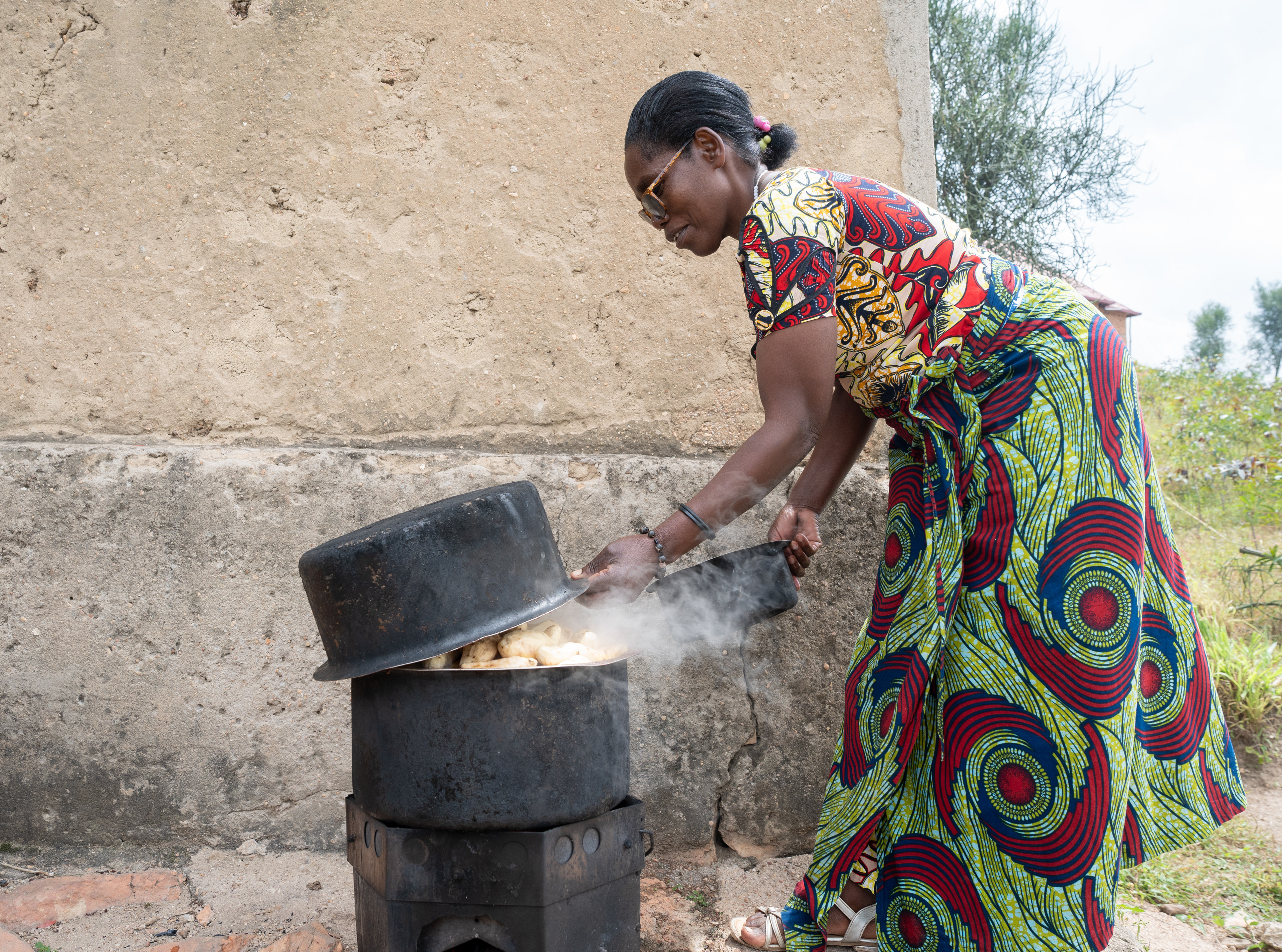
Flortine boils sweet potatoes while preparing a dish called ingereke at a rural home on Sunday, May 24, 2026 in Karama, Rwanda. Traditional Rwandan meals consist of mostly vegetarian items like sweet potato, beans, avocado, plantains and corn. Meat is more common in urban areas and fish is common near lakes. (Photo/Evan Frilingos)
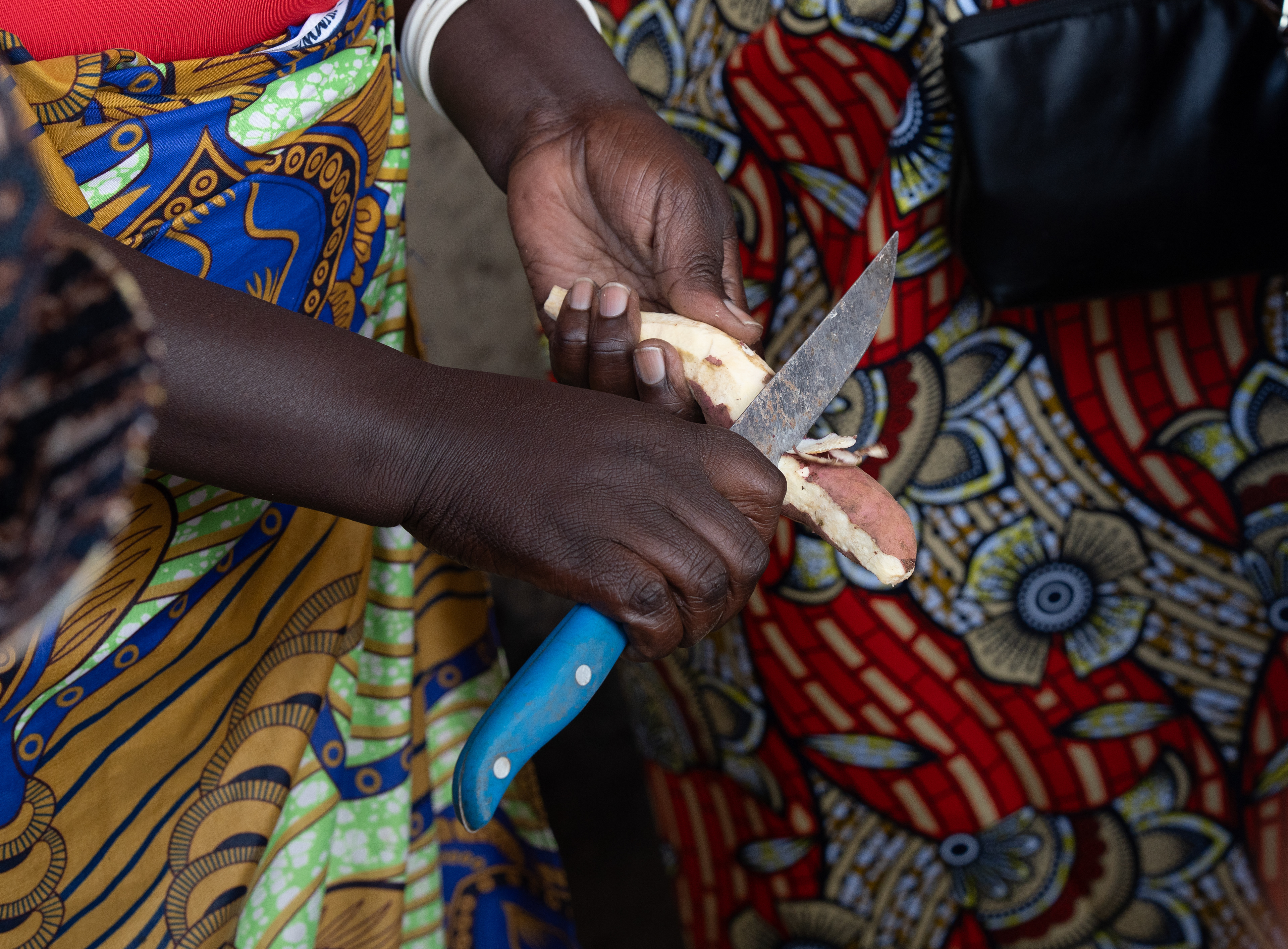
A woman peels sweet potato to prepare a vegetable meal at a rural home on Sunday, May 24, 2026 in Karama, Rwanda. (Photo/Evan Frilingos)
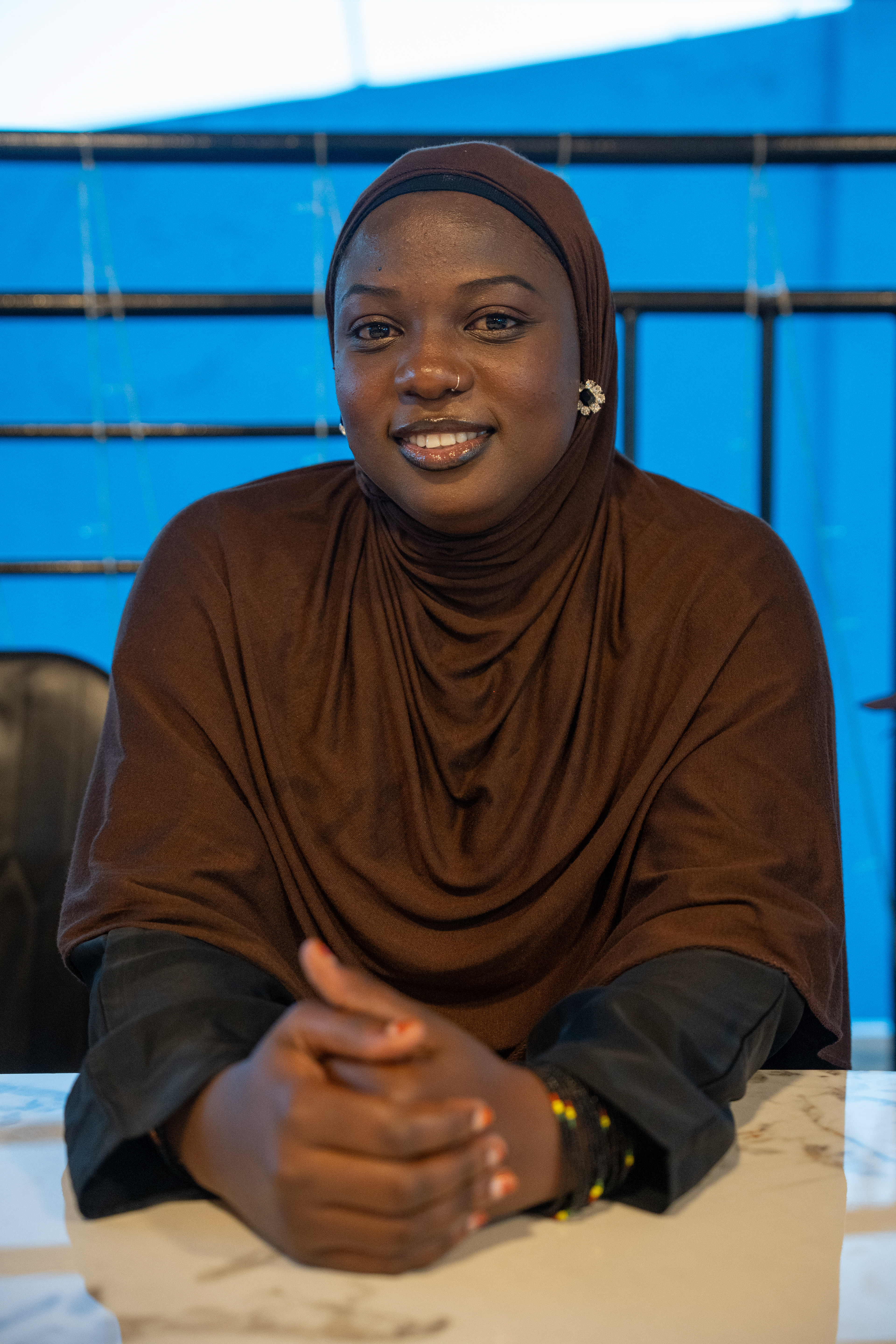
Shadia Umotoniwase, a tour guide at the Nyamirambo Women’s Center, poses for a photo on Tuesday, May 19, 2026 in Kigali, Rwanda. NWC is a women’s empowerment community hub that provides education and job resources to women who can’t afford them. It was founded in 2007 to address gender-based violence and discrimination. Umotoniwase’s job helps bring money to NWC through community tourism. Working for this organization reflects her love for her grandmother, who took care of her as child, Umotoniwase said. “Still now, I can say she’s the one who is my best friend,” she said. (Evan Frilingos/ Evan Frilingos 2026)
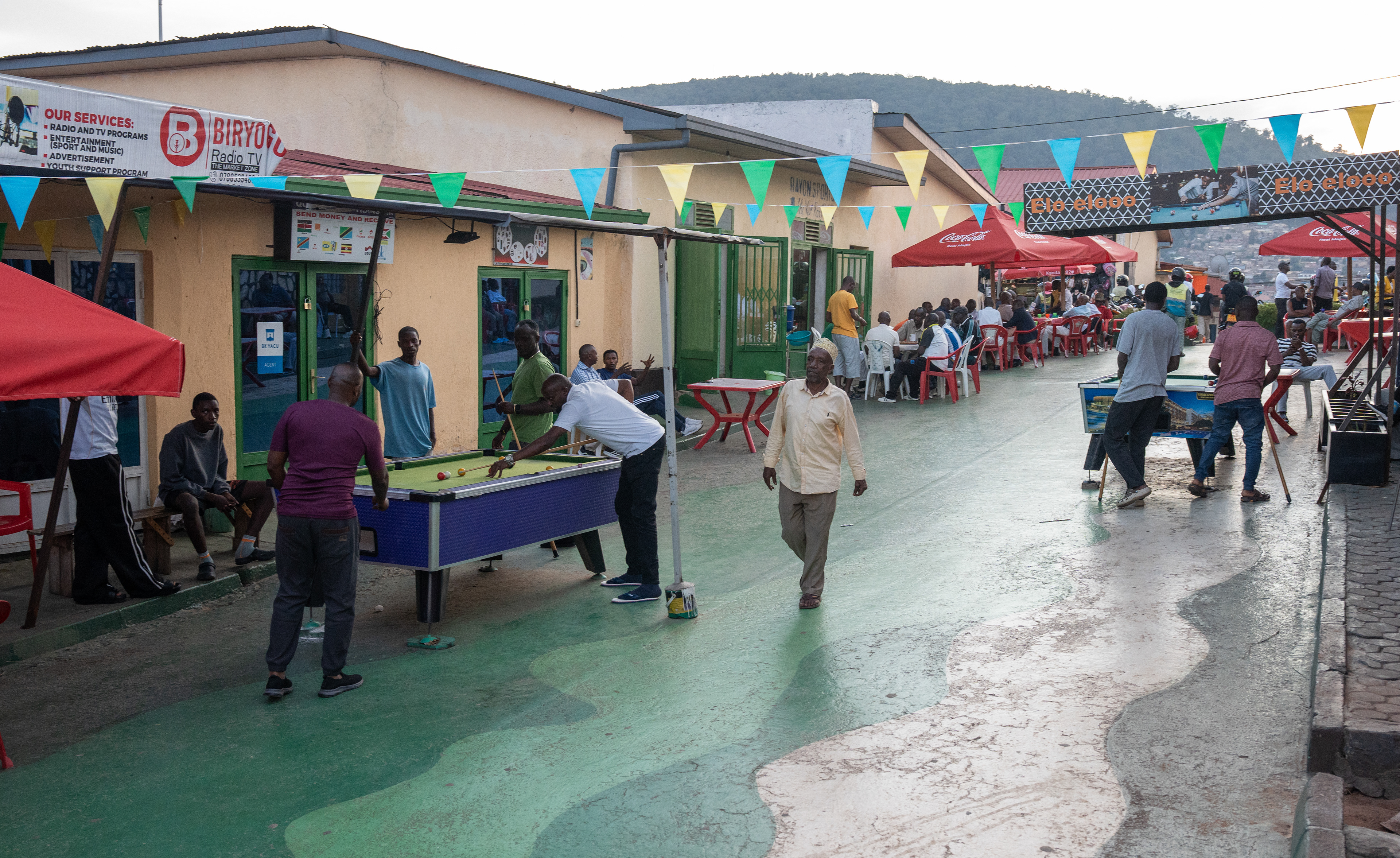
Men play pool in the evening on Sunday, May 17, 2026 in the Nyamirambo neighborhood in Kigali, Rwanda. Games and sports have been a fixture of Rwandan society for centuries. One of the most famous was Gusimbuka Urukiramende, which is similar to a high jump and dates to pre-colonization, tasked men with jumping over bars that were raised to heights above two meters, according to The Conversation. Today, pool is growing in popularity and pool tables often fill restaurant and cafe parlors. The walkable Nyamirambo neighborhood is filled with pool tables on sidewalks and walkways. (Photo/Evan Frilingos 2026)
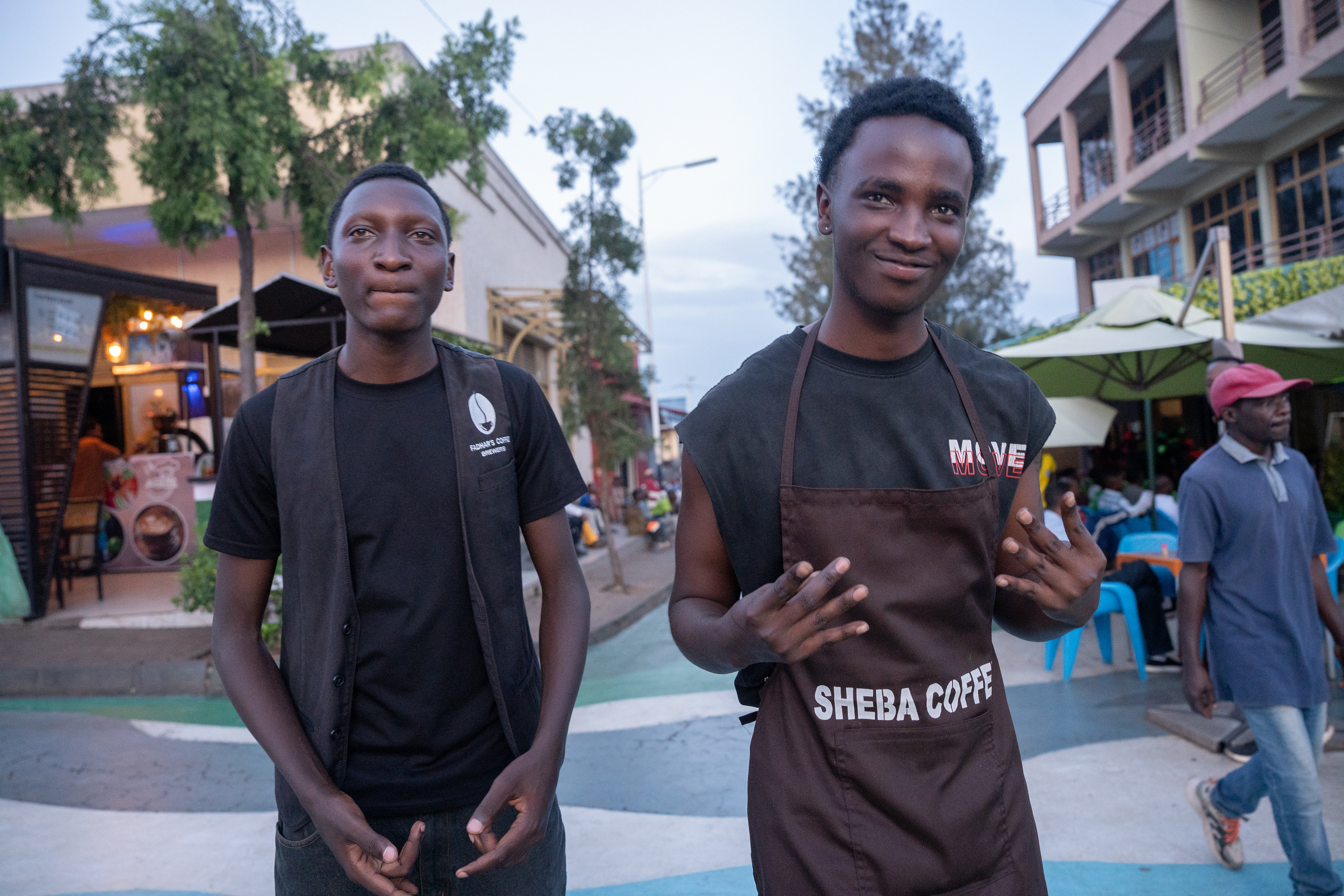
Abdul, left, and Pacifique prepare for a photo while people watch a Premier League football match under the umbrellas in the background on Sunday, May 17, 2026 in Kigali, Rwanda. Abdul is a fan of Real Madrid and his favorite player is Cristiano Ronaldo, while Pacifique supports Madrid’s rival Barcelona and believes Messi is the greatest player of all time ahead of Ronaldo. The debate between Messi and Ronaldo comes up often in Rwanda, where football is one of the most popular sports to watch and play. Rwanda’s official tourism arm, Visit Rwanda, has become one of the most recognizable sponsors in European football through Visit Rwanda’s jersey deals with leading clubs including Paris-Saint Germain in France and Arsenal in England. Many Rwandans support those teams as a result, which made for an engaging Champions League final between PSG and Arsenal in May. (Photo/Evan Frilingos 2026)
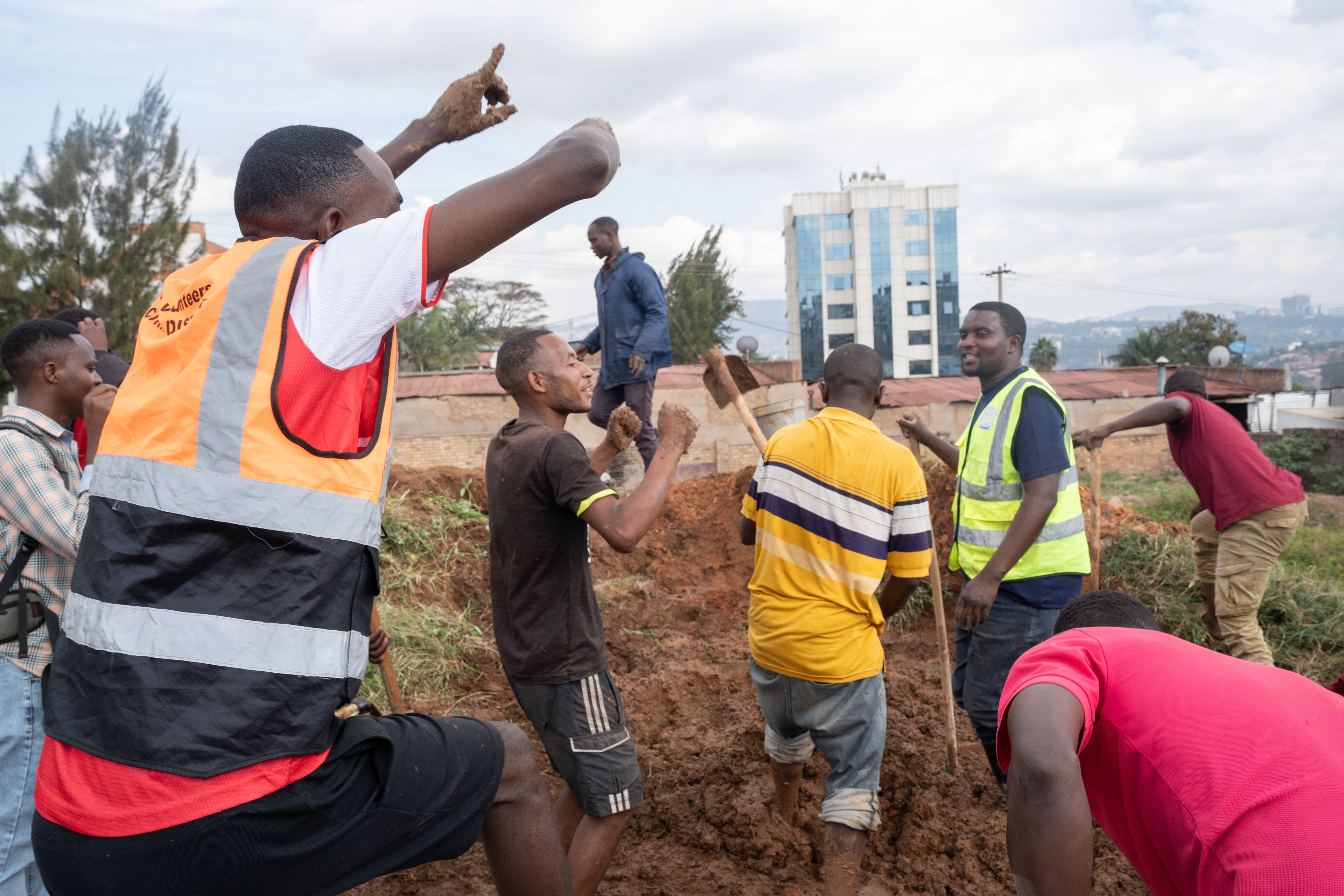
Participators in Umuganda, the national monthly day of service, dance and sing while making mud on Saturday, May 30, 2026 in Kigali, Rwanda. The mud would be turned into bricks to construct a home for orphans in the community. Umuganda, which means “coming together in common purpose” in Kinyarwanda, is a mandatory day of service on the last Saturday of each month. Public projects commence including trash cleanup, home building, tree planting and more. The practice was re-established after the genocide as a way to bring communities together over the shared purpose of reconstruction, reconciliation and national pride. (Photo/Evan Frilingos 2026)
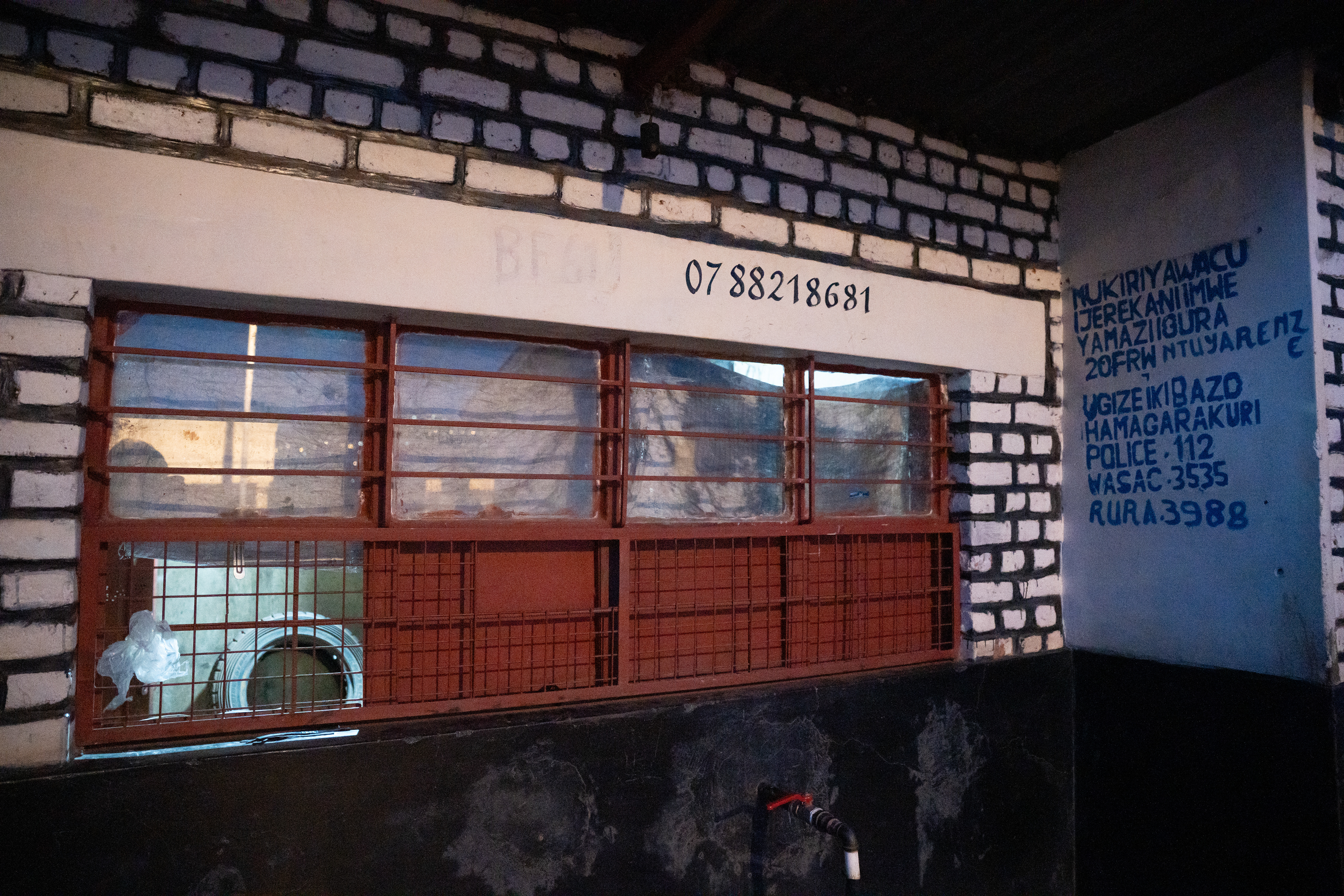
A tap water building serves people looking to purchase clean water for a minimal price on Sunday, May 17, 2026 in Kigali, Rwanda. These buildings are part of a government effort to increase public access to cheap, clean water. They contain spring water from nearby Mount Kigali and writing on the wall instructs customers to call the police if the prices are raised by local managers. During the genocide, water infrastructure was damaged and destroyed across the country. Water has since become a priority in Rwanda, evidenced by the creation of the Rwanda Water Resource Board and commitment to aligning itself with the United Nations’ Sustainable Development Goal 6 of universal access to safe and affordable drinking water by 2030. Access to improved drinking water sources rose to from about 64% in 2000 to 90% by 2024, according to Rwanda’s government and UNICEF. Those sources have also gotten significantly closer to homes and more widespread in rural areas. (Photo/Evan Frilingos 2026)
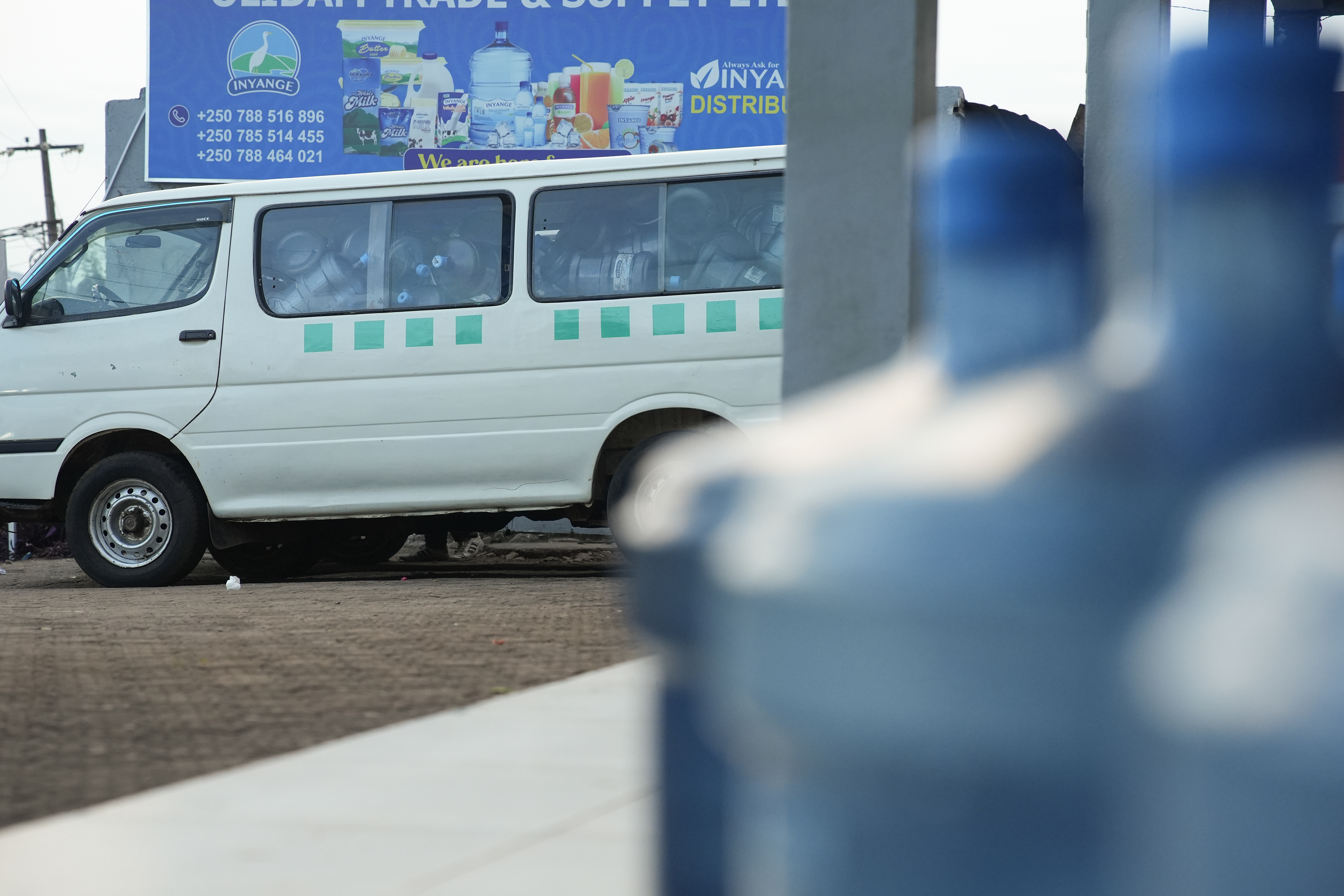
Empty plastic water jugs await recycling and fill a truck on Thursday, May 21, 2026 in Kigali, Rwanda. Kigali is widely recognized as the cleanest city and Rwanda the cleanest country in Africa, reflecting the government’s prioritization of climate neutrality and waste management. Plastic bags were banned in 2008 and by 2019 all single-use plastics were banned in Rwanda. The Rwanda Climate Action Plan and Vision 2050 aims to have achieved a climate-resilient, net-zero economy by 2025. The nation ties its emphasis on cleanliness to preventing conditions that lead to the violence, hate and division seen during the genocide. A wall at the Kigali Genocide Memorial is dedicated to explaining the negative effects of climate change and how it leads to identity-based violence. (Photo/Evan Frilingos 2026)
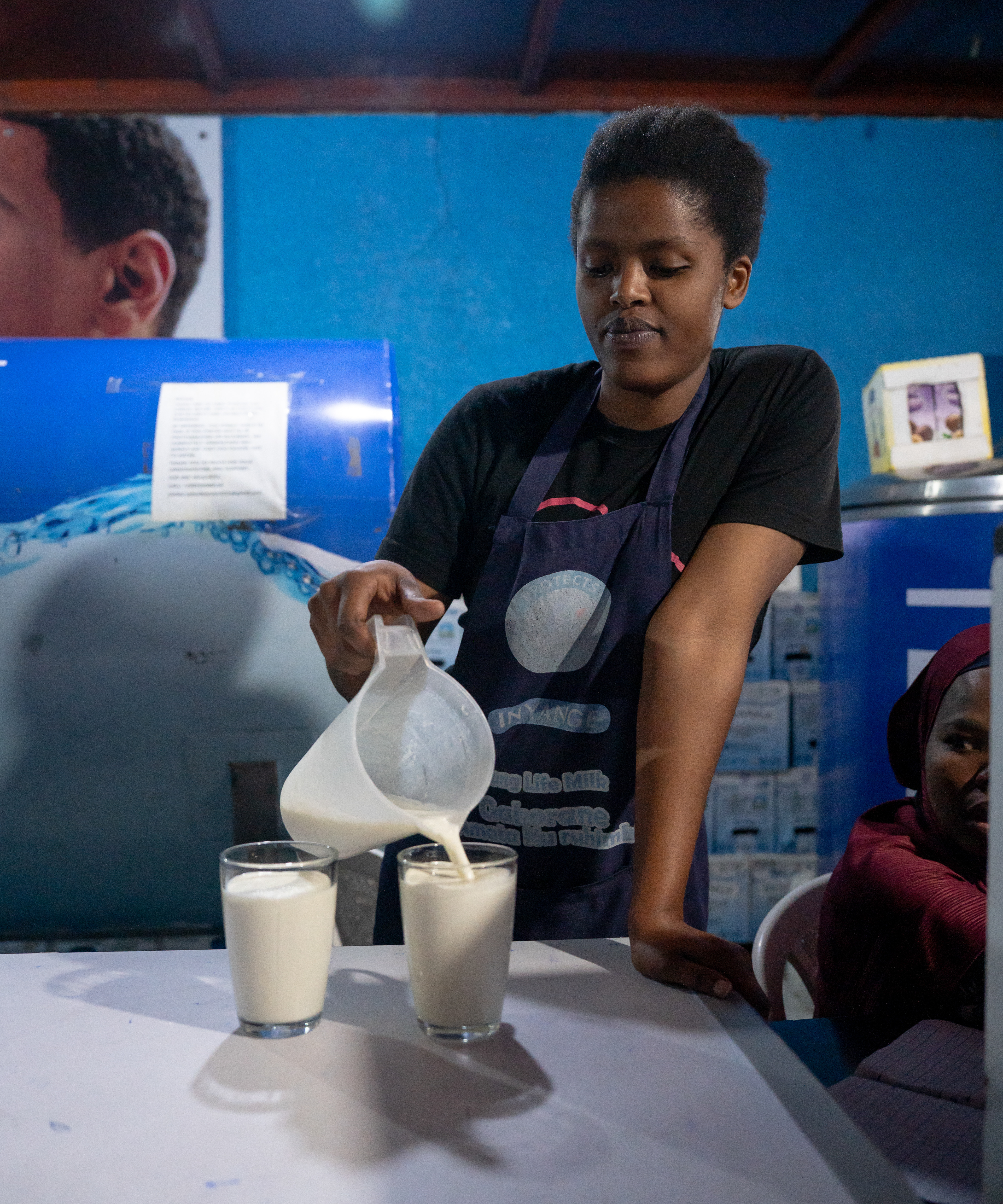
Erinesitine pours milk inside the Inyange Milk Bar on Sunday, May 17, 2026 in Kigali, Rwanda. Cows have been intrinsic to Rwandan society for centuries as symbols of wealth and status. But during the genocide, cattle herders and cows were killed as Tutsis were historically associated with herding. President Paul Kagame introduced a program called “Girinka” in 2006 to gift cows to poor families and help the cattle economy rebound following the genocide. Milk production increased and milk bars were started to connect cattle farmers to an increasing urban population, according to the New York Times. Milk can be served in a variety of ways, including different temperatures and processing types. Inyange is one of Rwanda’s leading dairy and beverage manufacturers. (Photo/Evan Frilingos 2026)
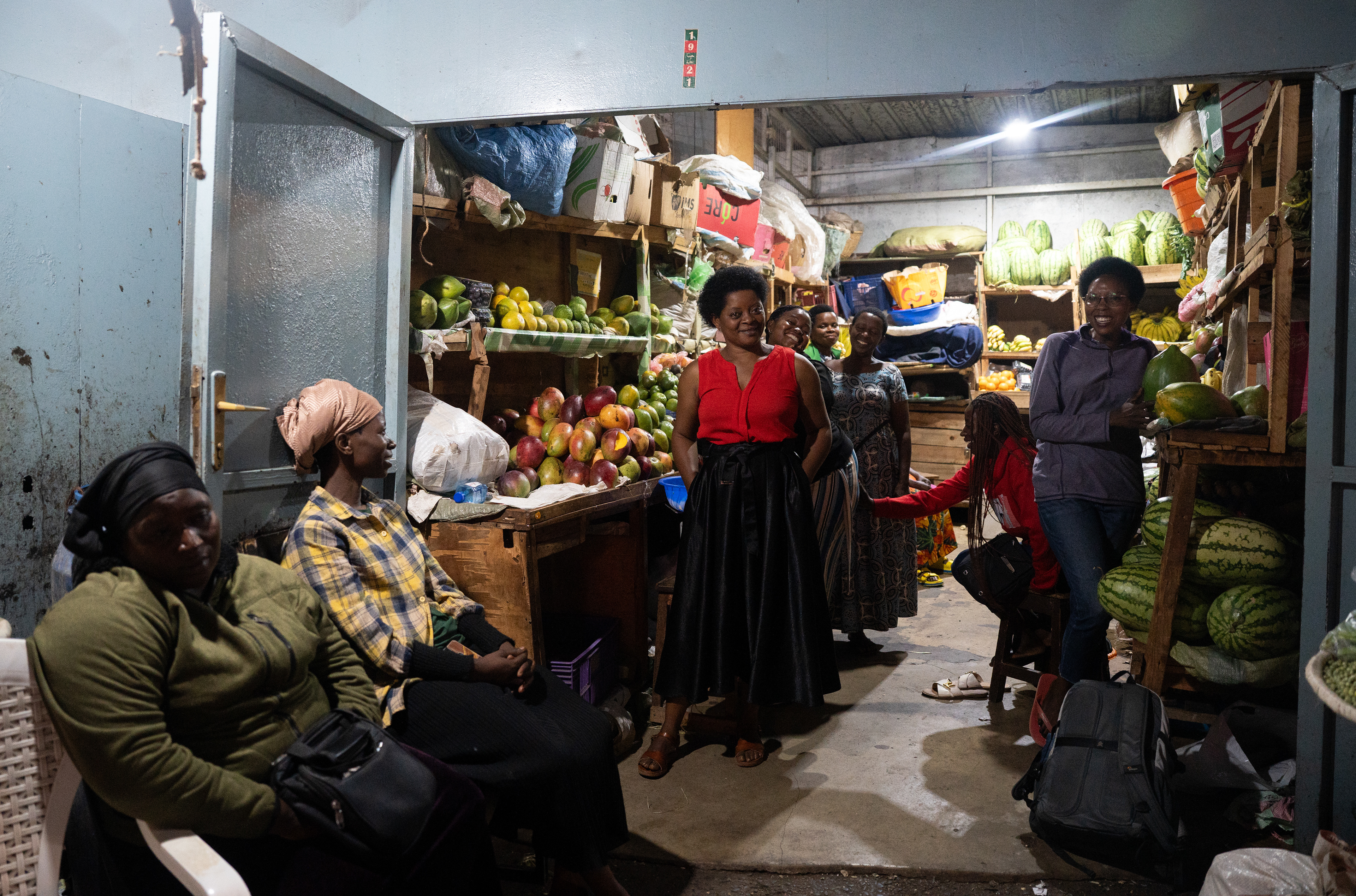
A group of women sell fruit at a fruit stand on Monday, May 25, 2026 in Kigali, Rwanda. Read more at the story "Photojournalism and a fruit stand" on my website. (Photo/Evan Frilingos 2026)
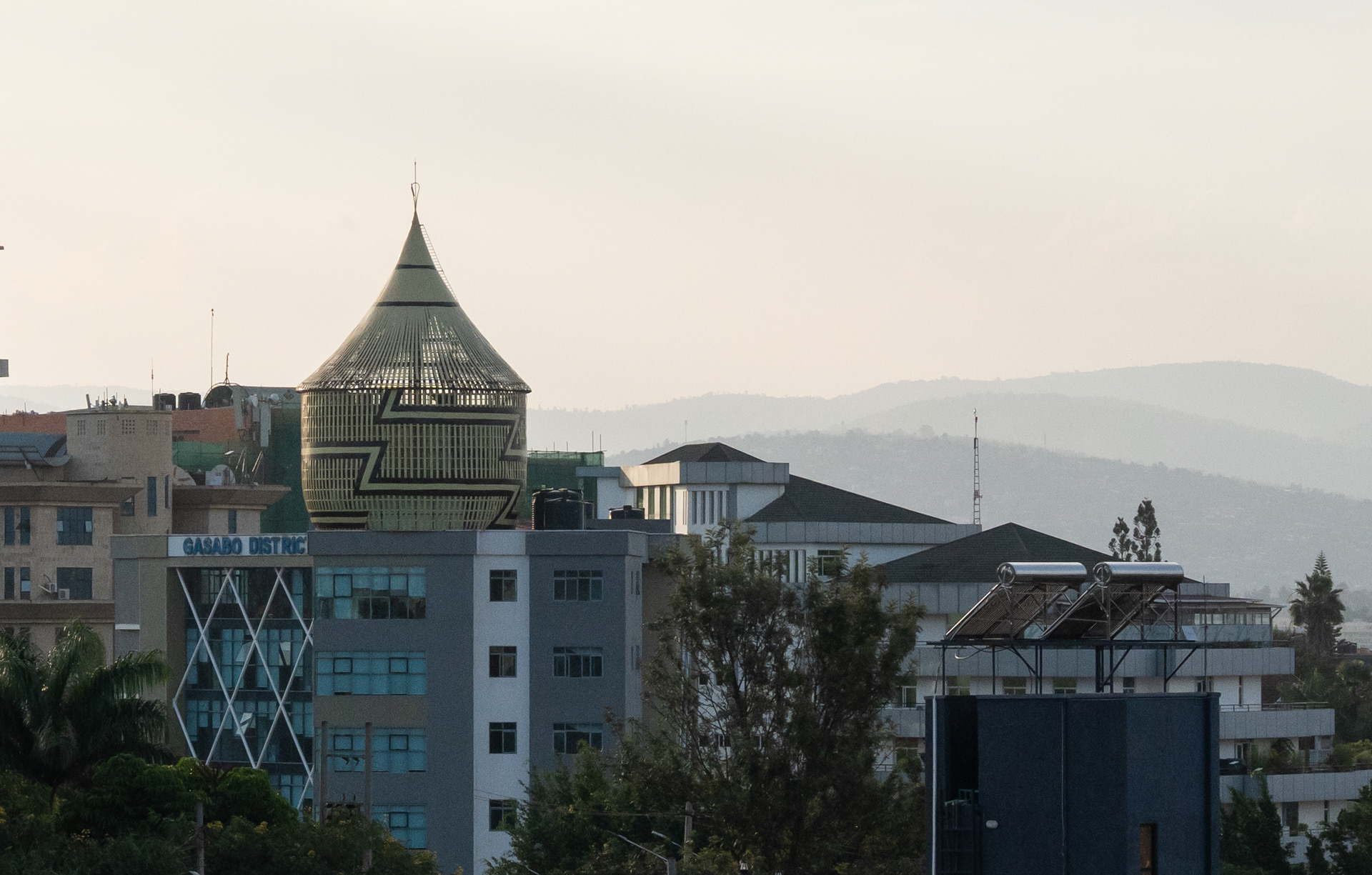
A large structure resembling a peace basket sits atop a high-rise on Wednesday, May 27, 2026 in Kigali, Rwanda. Afrofuturism re-imagines science fiction and the future with African aesthetics, culture and society at the center. It is often found in works of fiction, such as Ryan Coogler’s fictional city Wakanda and film “Black Panther.” But Kigali is bringing Afrofuturism to life through infrastructure like the Amahoro Stadium, this basket and the Kigali Convention Center, Africa’s most expensive building designed to resemble the former royal palaces. (Photo/Evan Frilingos 2026)
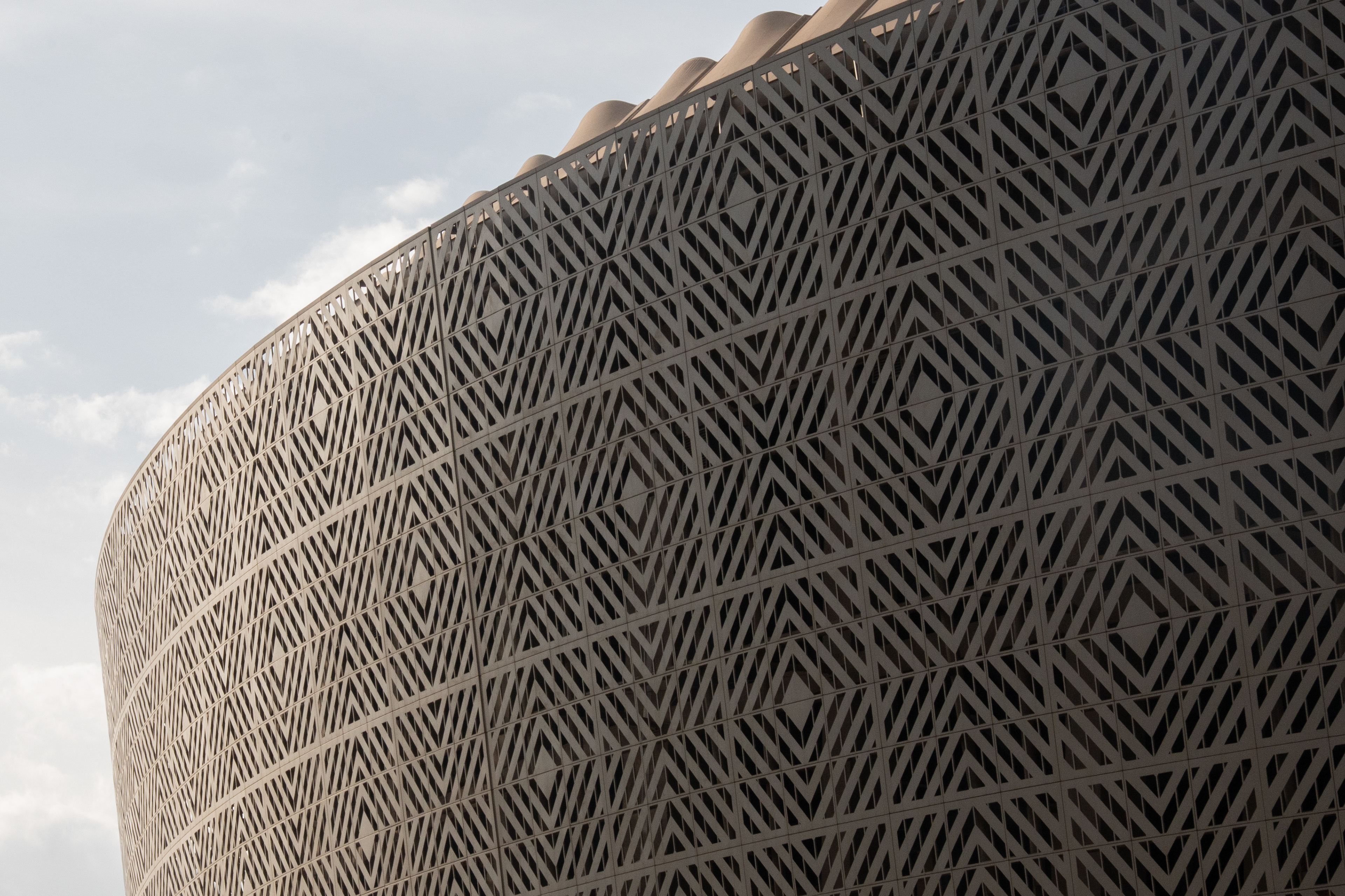
Amahoro Stadium, meaning peace stadium, from the outside on Wednesday, May 27, 2026 in Kigali, Rwanda. Amahoro served as the headquarters for the United Nations Assistance Mission in Rwanda during the genocide, although UNAMIR was ineffective due to the United Nations Security Council’s failure to vote in favor of preventing the genocide. The stadium was renovated and re-opened in 2024 as the largest in the country holding over 45,000 people. The pattern on the outside resembles traditional Rwandan imigongo designs. (Photo/Evan Frilingos 2026)
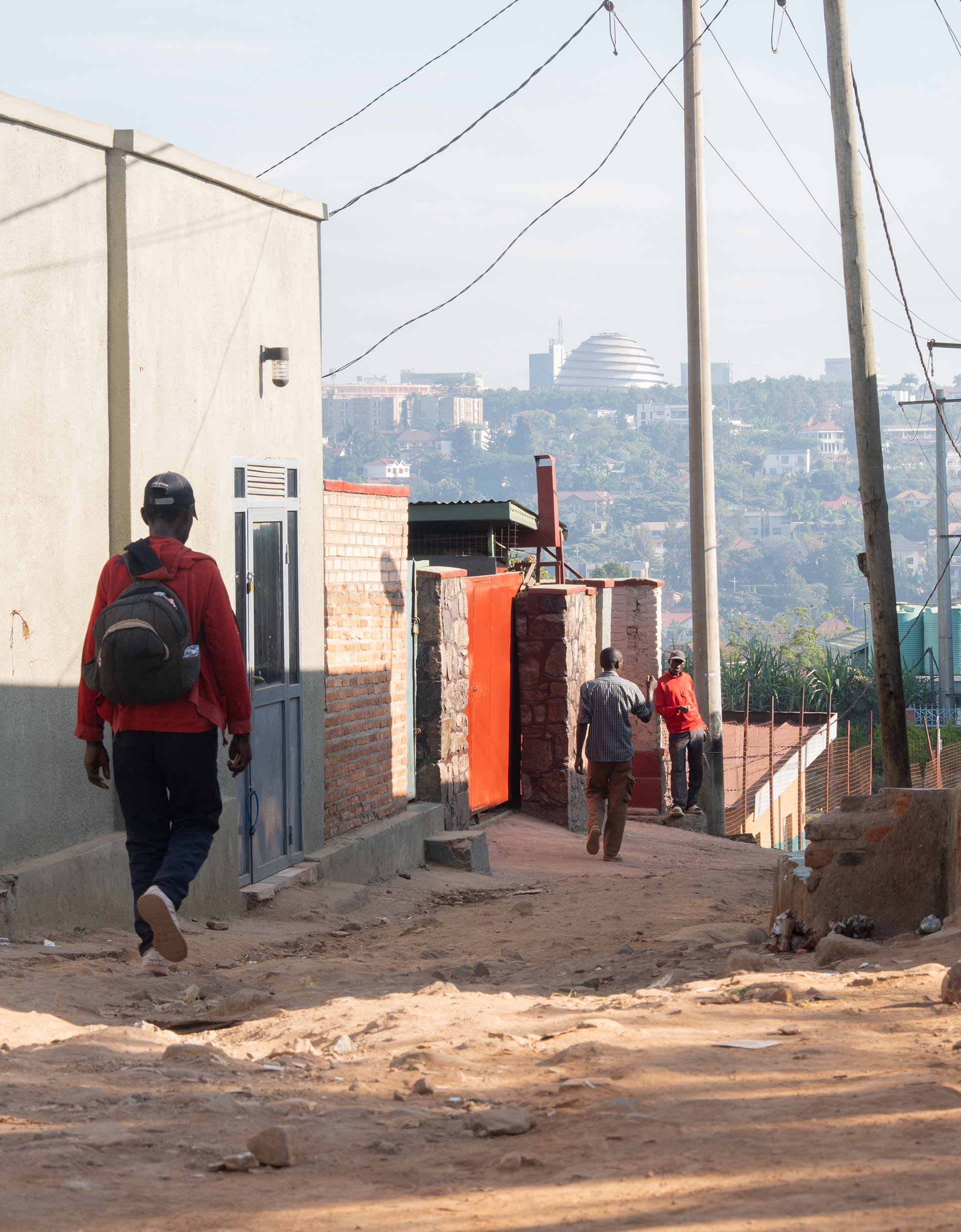
The Kigali Convention Center is seen on the horizon from a suburb on Saturday, May 30, 2026 in Kigali, Rwanda. (Photo/Evan Frilingos 2026)
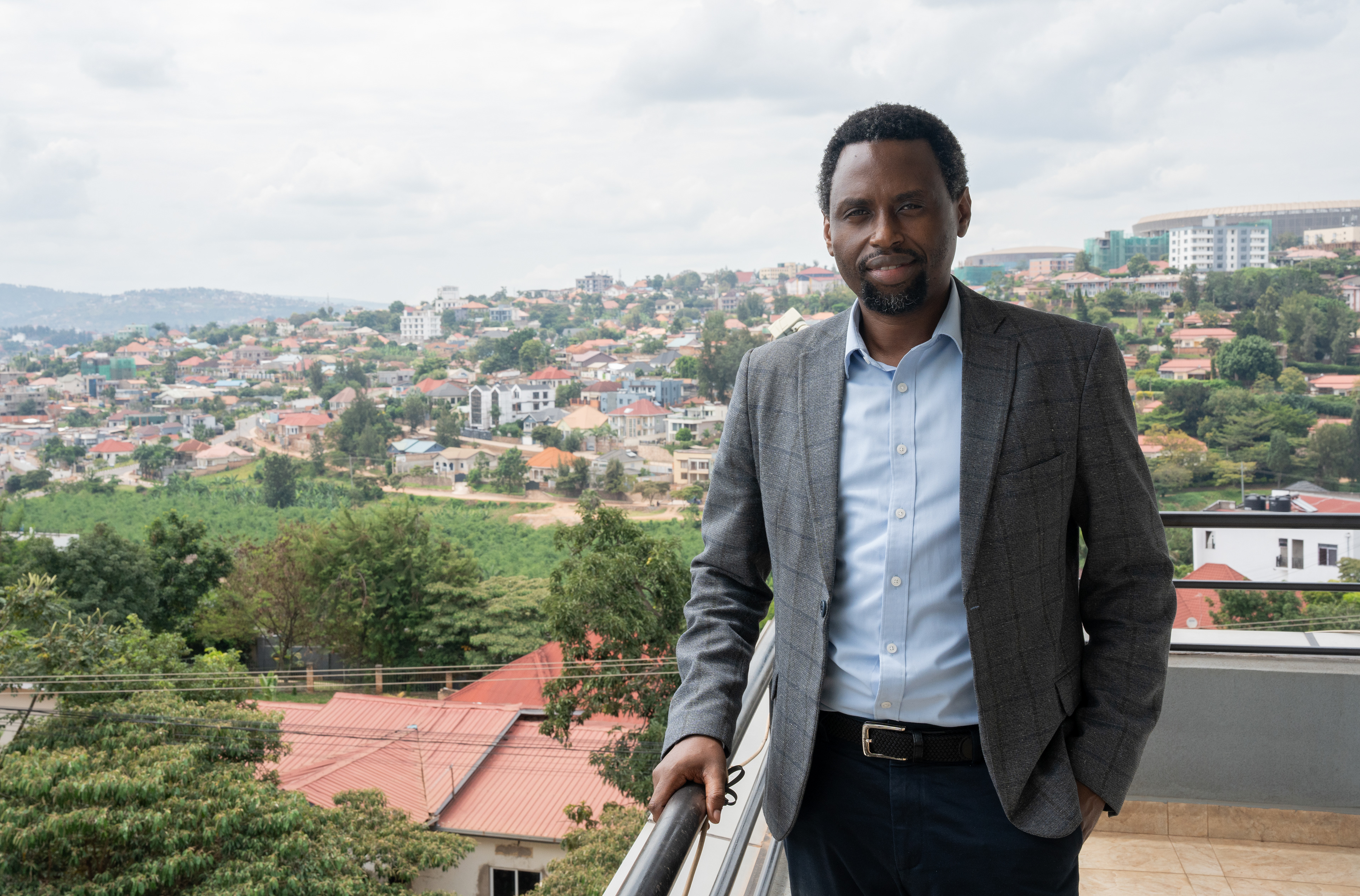
James Munyaneza, The New Times managing director and editor-in-chief, poses for a photo on the newsroom’s balcony overlooking the city on Tuesday, May 19, 2026 in Kigali, Rwanda. The New Times is Rwanda’s leading daily news outlet established in 1995, a year after the genocide against the Tutsi. Media outlets, especially radio stations including Radio Télévision Libre des Mille Collines, spread hate propaganda that played a major role in inciting the genocide. Journalism’s past in Rwanda informs how Munyaneza views its purpose today. “Because of our past, we feel a burden to do journalism that unites, that inspires hope, that speaks to the aspirations of our people,” he said. (Evan Frilingos/ Evan Frilingos 2026)